

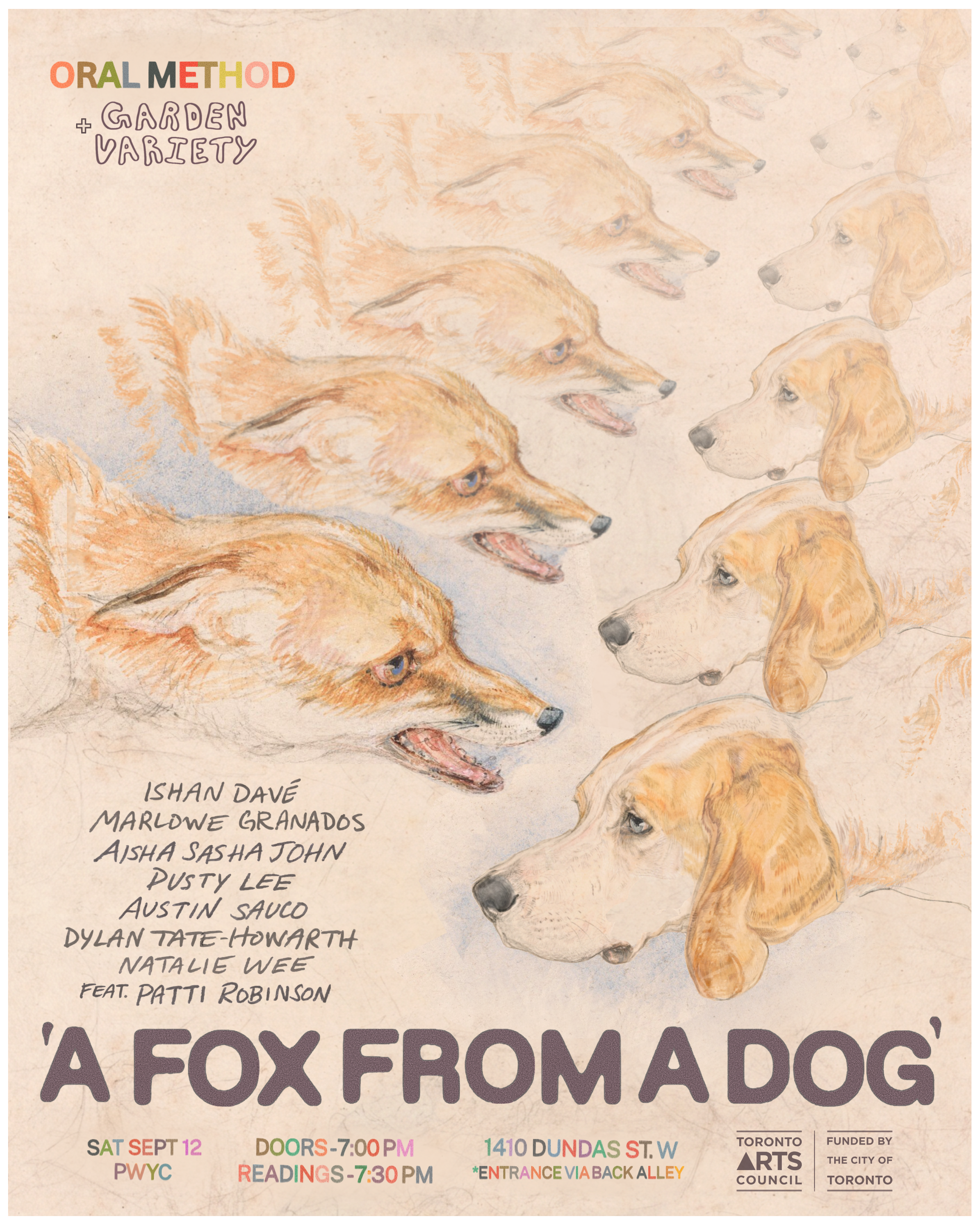
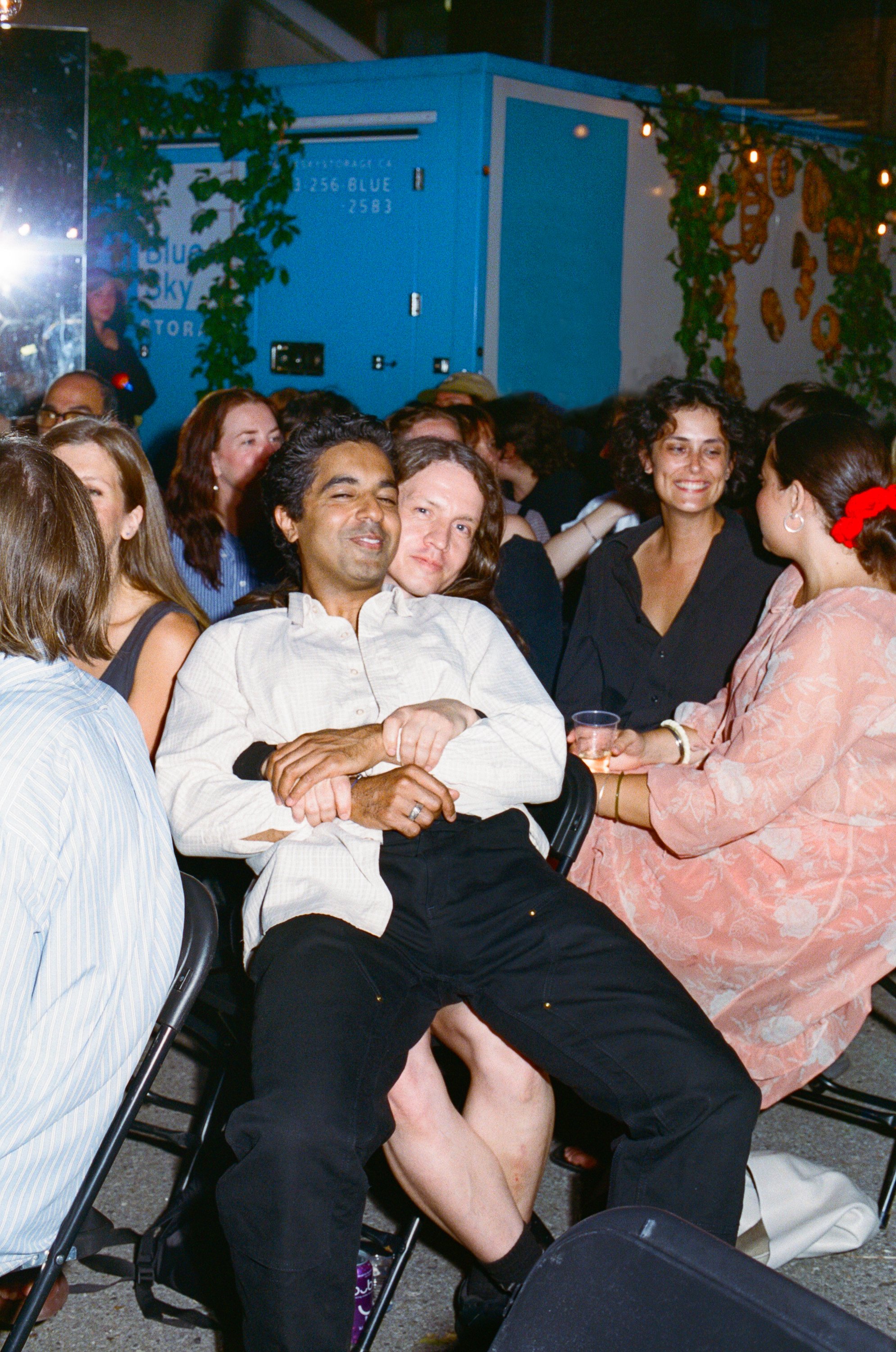
A fox from a dog, September 12, 2026
Co-presented with Oral Method
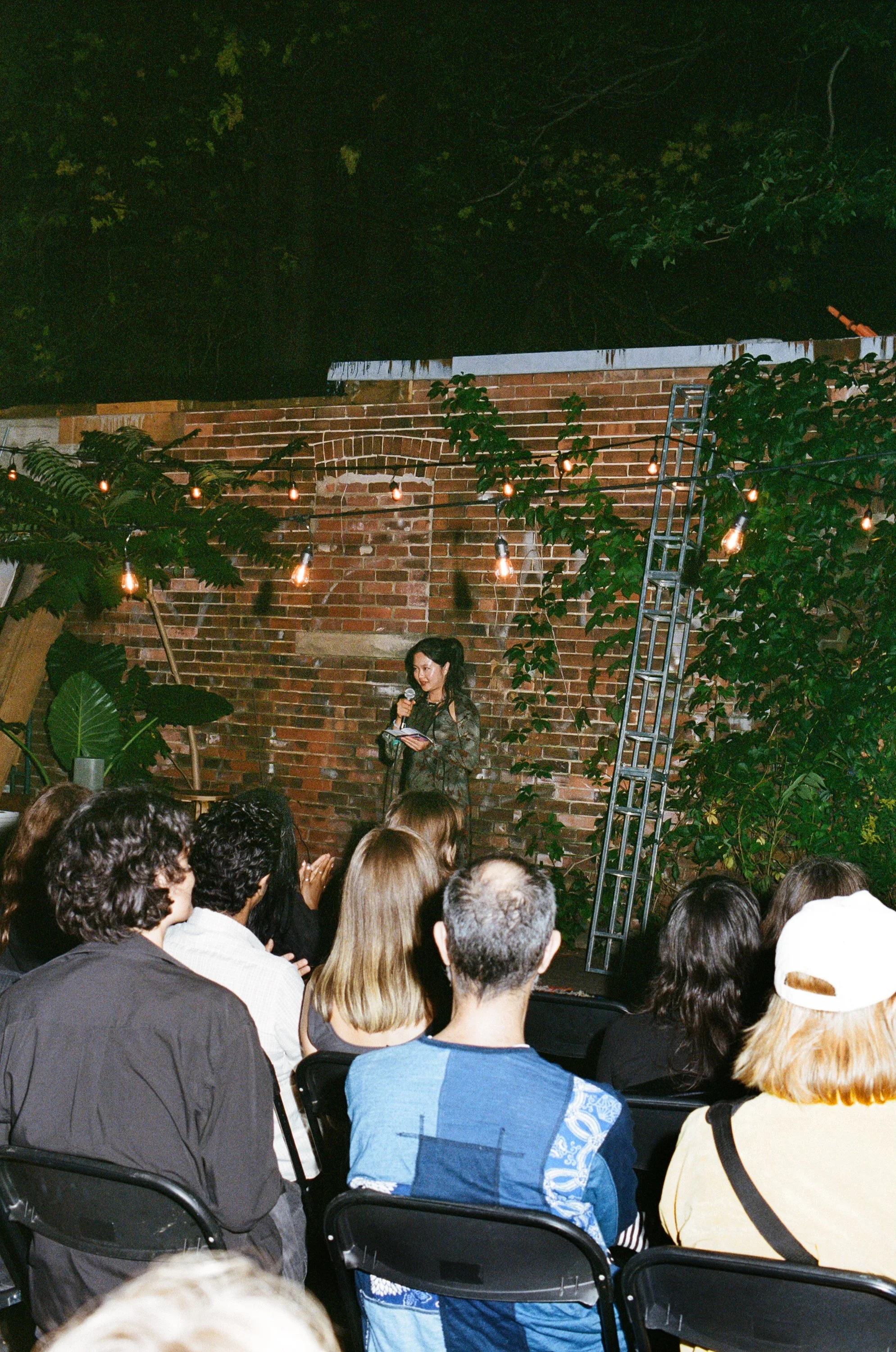
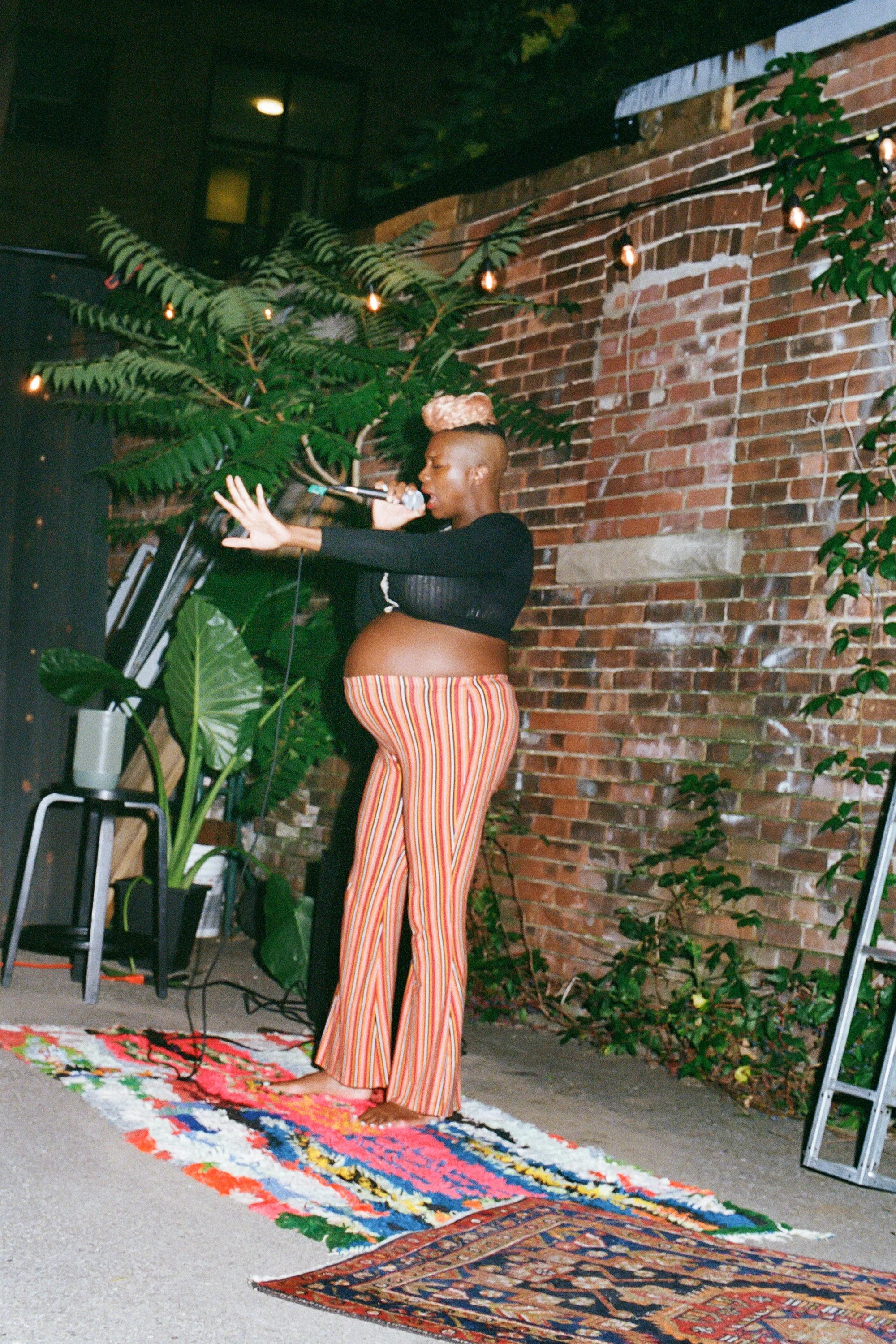
Ishan Davé
Marlowe Granados
Aisha Sasha John
Dylan Tate-Howarth
Dusty Lee
Natalie Wee
The prompt a fox from a dog comes from Reza Negarestani’s 2012 essay “Undercover Softness: An Introduction to the Architecture and Politics of Decay,” which has informed Garden Variety’s ongoing engagement with decay. In the essay, Negarestani understands decay as an active, generative force. Decay can produce new life, as with a mushroom growing on a rotting log. It can also hollow out structures, expose hidden interiors and the systems that operate within them, redistribute matter, and create conditions for something else to emerge.
Near the beginning of the essay, Negarestani recalls a wonderfully strange question posed by the 14th-century theologian Henry of Langenstein: whether “a fox can spontaneously be generated from a dog’s carcass.” This image sits somewhere between medieval cosmology, speculative fiction, biology, horror, and transformation. It raises questions about what kinds of things might emerge from other things, and what it means to inherit, inhabit, consume, or outlive another body.
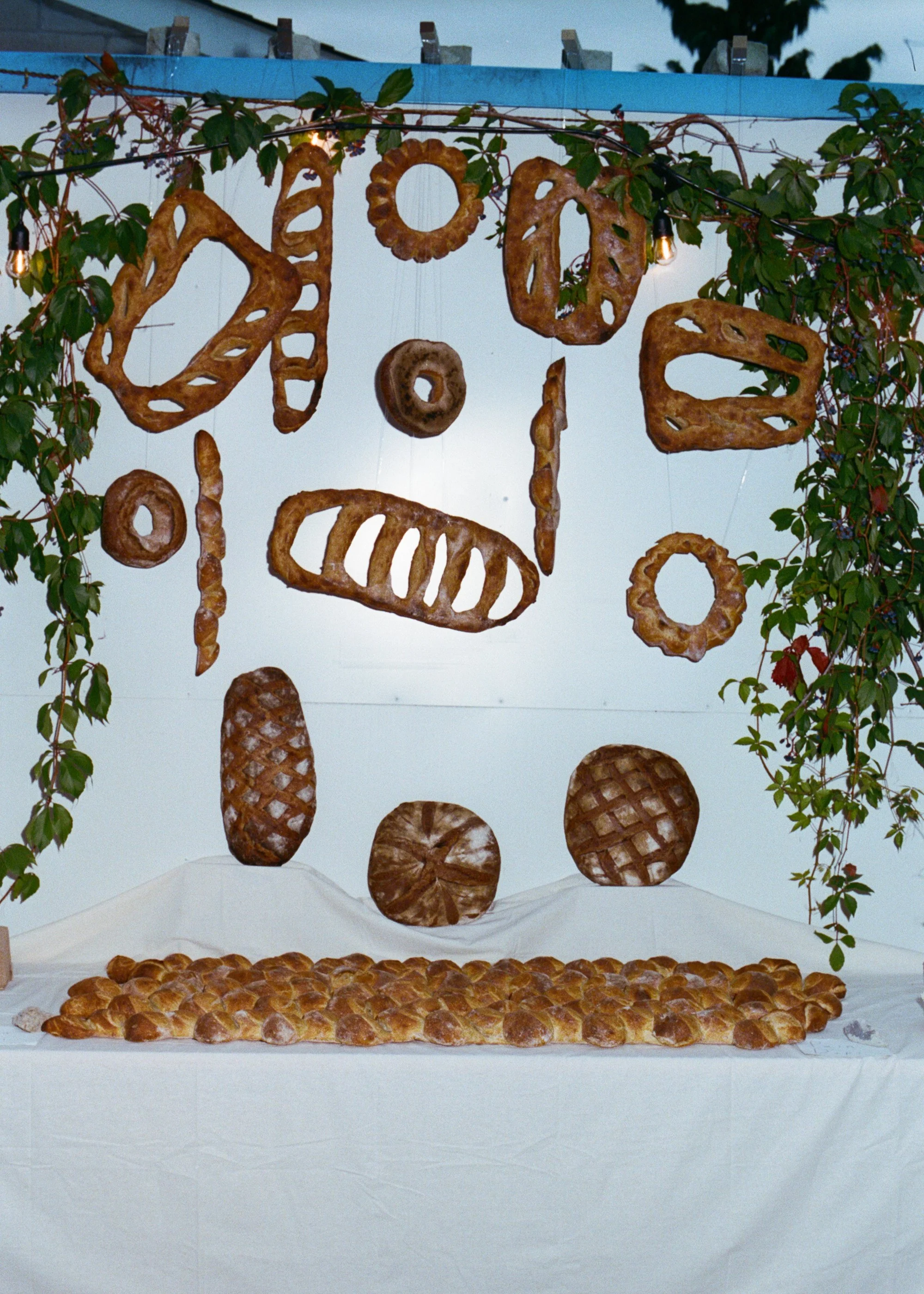
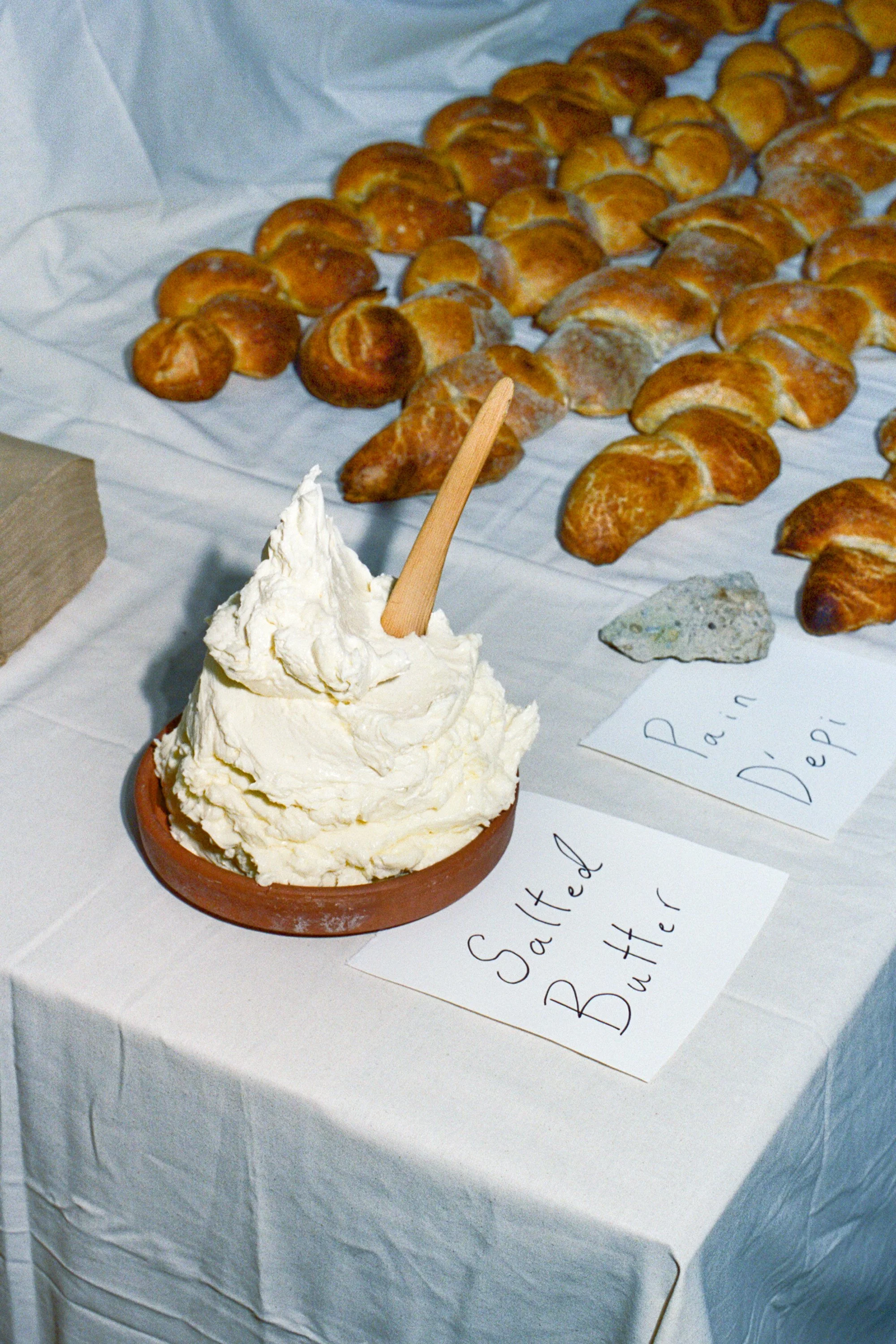
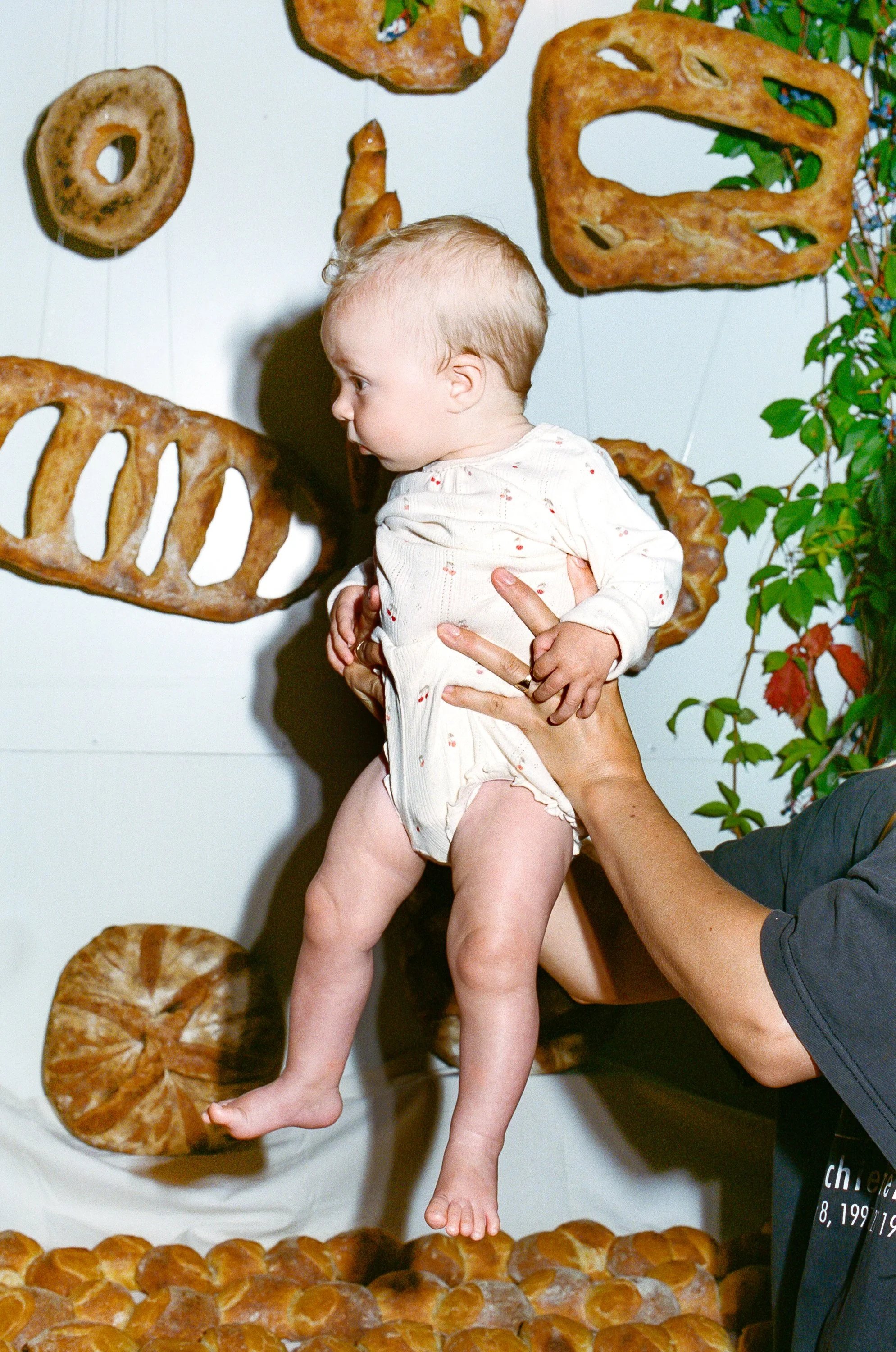
For a fox from a dog, Garden Variety and Oral Method invited writers and artists to consider what subjects, forms, or ideas this proposition might inspire. Decay and rot can have consequences that are simultaneously generative and destructive. Decay can be visceral yet nourishing, as in the fermentation that gives bread its rise, or nearly imperceptible yet harmful, as with certain kinds of mould.
The program also considered what decay might sound like in language and composition. Does an untended draft begin to rot? How does it feel to return to a half-written, half-remembered, or half-realized project? What happens to writing when it is interrupted or abandoned?
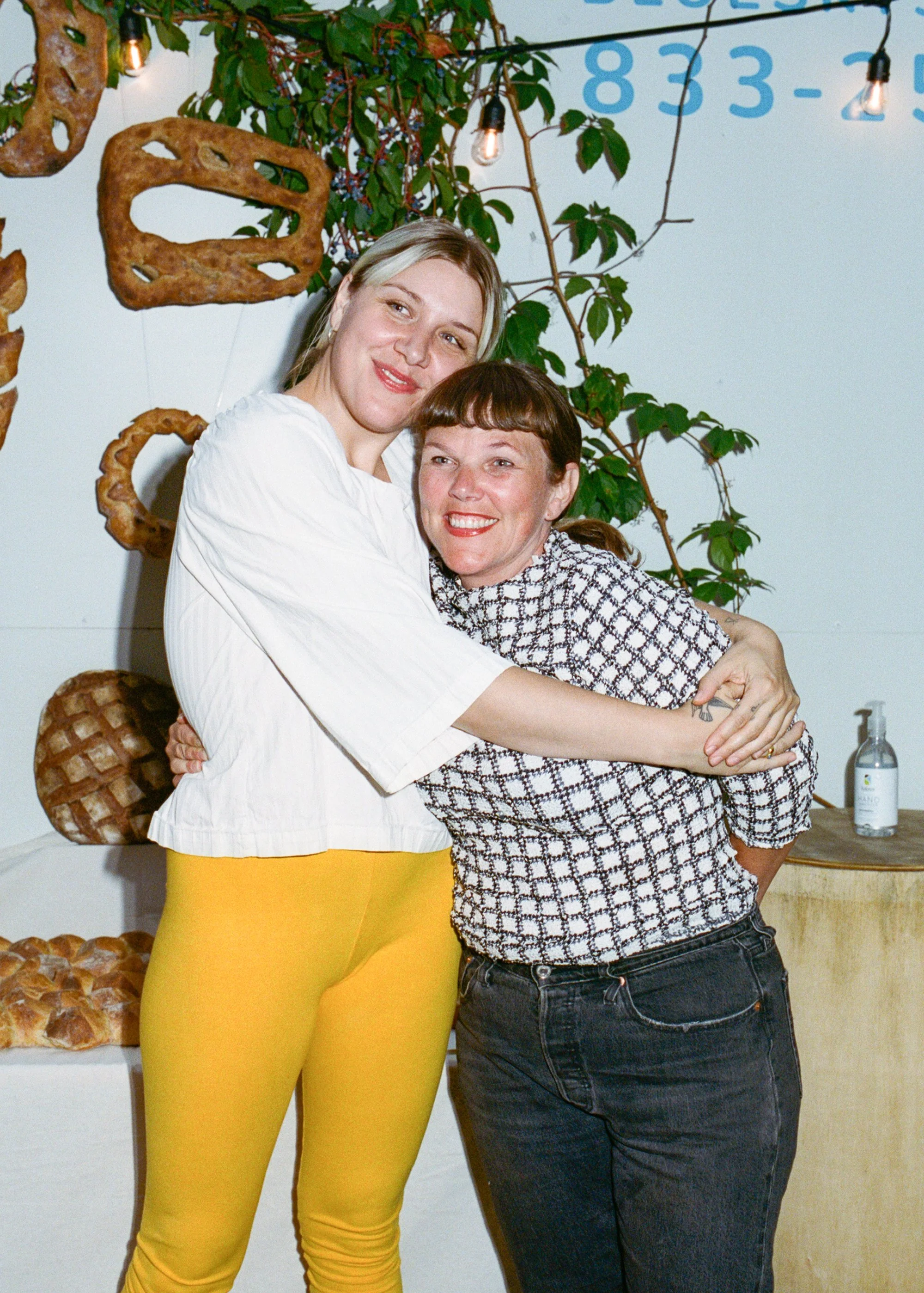
Esmé Hoegeveen organizes Oral Method, an experimental reading series that invites writers and artists to create new work in response to a shared prompt. Oral Method emphasizes the oral (speaking) and aural (listening) dimensions of language, creating opportunities for writers working across different forms and genres to experiment together.
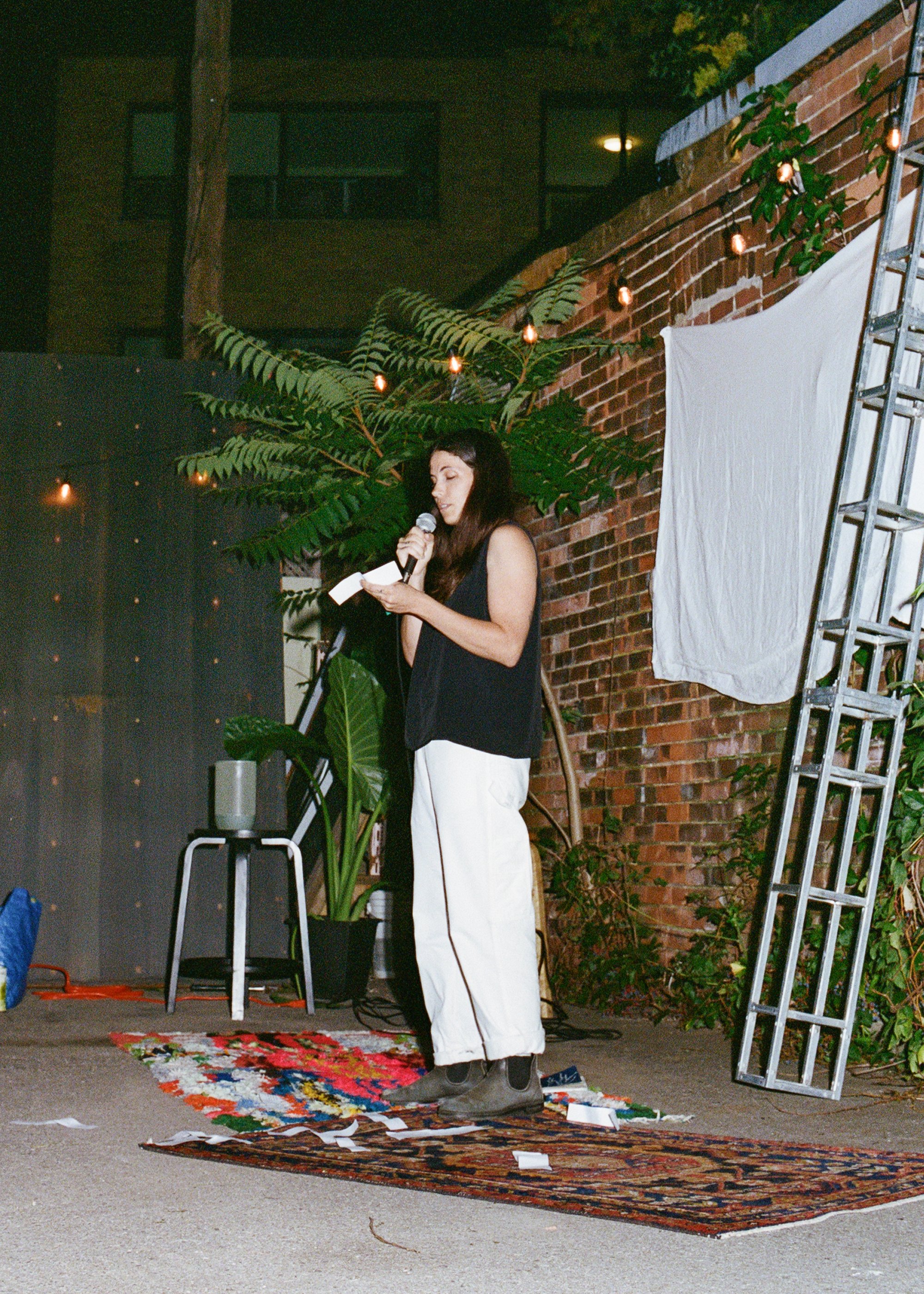
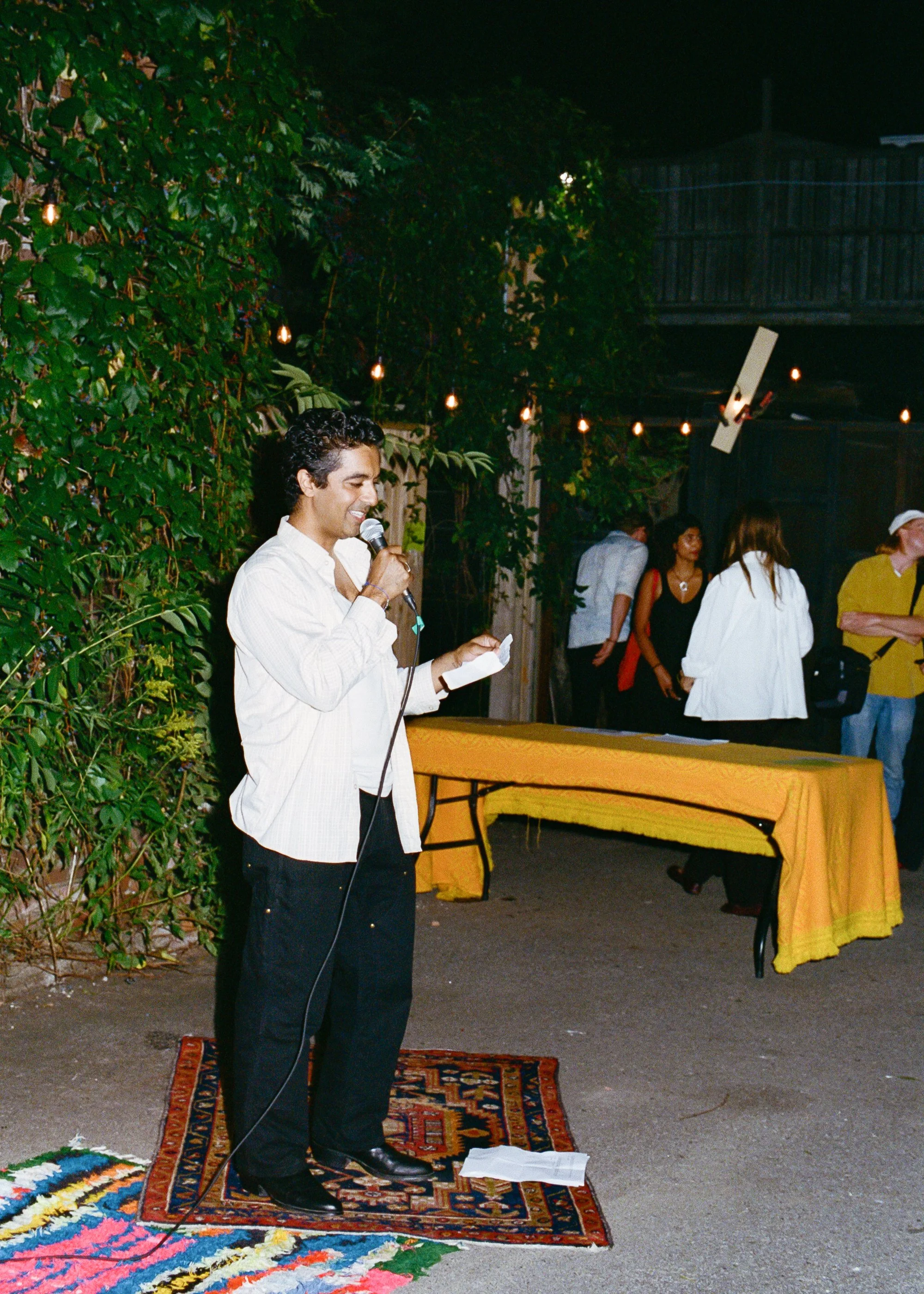
Documentation by May Arida